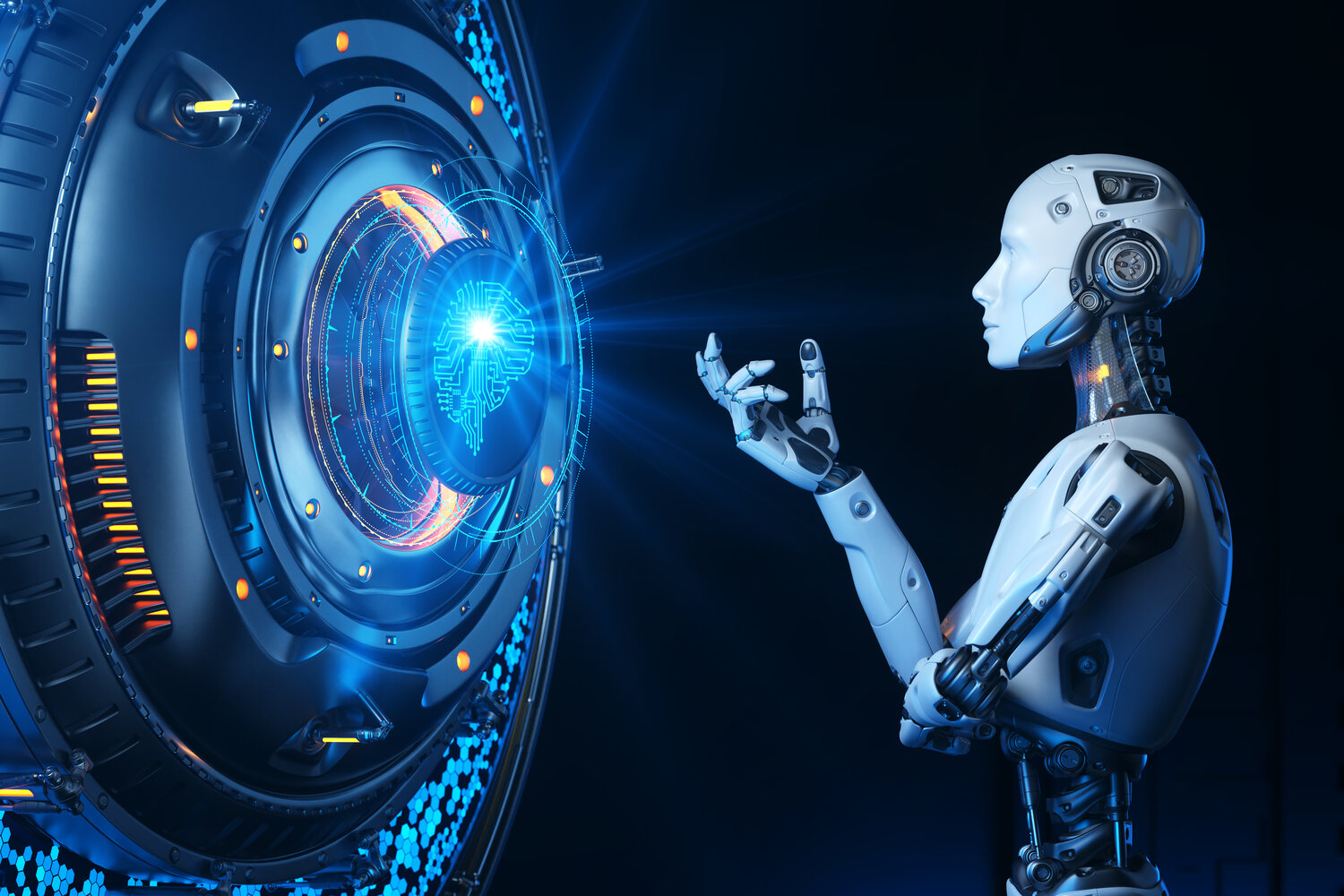
AI can improve our daily lives
Similar to the Internet of Things (IoT), AI is here to remain. It is predicted that the global AI market is expected to expand by 54% annually through 2025, as per the latest study conducted by Statista.
It’s the responsibility of business leaders to be aware of the advantages and disadvantages of using artificial intelligence, and to devise ways that AI can be used to best serve the needs of customers. AI can provide a range of benefits in a variety of industries and segments.
Companies recognize the necessity for precise data collection along with easy processing and sufficient analytics that can aid in crucial decision-making processes that provide vital insight — just to mention a few.
However, the massive amount and quantity of data can’t be processed in the same way by humans. AI plays an essential role in transforming these huge databases into useful, accurate data that can make our daily lives much easier.
In certain industries, AI’s advent accelerates processes and decreases human error. This leads to the elimination of human labor. In other cases, AI creates new hybrid jobs where AI can enhance human capabilities.
Table of Contents
Six ways AI can be beneficial in the workplace
The applications and benefits of AI are growing each day. Here are some benefits of companies using artificial intelligence:
- Automating repetitive tasks: With AI-powered systems and automation allows humans to concentrate on more strategic and creative tasks, resulting in increased productivity and more rapid decision-making.
- It is able to handle large data volumes: AI can process and analyze huge amounts of real-time information quickly and efficiently, which can help both data scientists and businesses to gain important insights and make better decisions. For instance, in the world of finance, AI algorithms can identify intricate economic patterns, improve trading strategies, and manage risk more efficiently.
In addition, AI drives predictive analytics. Algorithms can analyse the historical data to anticipate the future behavior, trends, and results. This is especially useful for companies to anticipate their customers’ preferences to personalize digital experiences, optimizing the supply chain and services like energy consumption, and also monitor environmental changes that affect the environment and natural resources. - Improves workflows and processes: AI-powered tools can be used to aid teams and individuals through their generative capabilities and speed up the time needed to finish complex tasks. For instance, AI-powered tools for translating languages have made it easier to access information across cultures and languages.
Regarding digital customer experiences in terms of digital customer experiences AI helps marketing professionals develop and design content, as well as make and alter graphics and images to create content.
The verticals also grow, including the entertainment industry, where AI technology is employed to create video games and special effects in film, the composition of music, or even the creation of art. - Reduce human error: AI is becoming more efficient in powering autonomous systems, including drones, vehicles, and robotics. They aid systems in operating in dangerous environments, complete tasks that require no human intervention, and are a major contributor to the logistics, transportation, and manufacturing industries.
In the field of healthcare, technology is able to aid in the diagnosis of illnesses, predict outbreaks, and identify potential drugs. It also improves the analysis of medical images, which makes diagnosis more precise.
AI can also help speed up scientific discoveries by analyzing large data sets, simulated experiments, as well as identifying patterns that may be difficult for humans to recognize. - Security and fraud detection: AI can detect unusual patterns and behaviours, aiding in the detection of fraud as well as enhancing cybersecurity by identifying potential security threats.
- Ability to be available at all times: AI’s capacity to remain available even when human beings are not able to help organizations perform important functions without the need for supervision. For example, in customer service chatbots, virtual assistants, and chatbots powered by AI provide 24 hours of customer support and can take care of a broad array of customer inquiries.
The negatives of AI
As with all technological advances, AI can contribute to an array of complicated issues. The most notable cons are:
Cost: Building a machine capable of mimicking human intelligence is a huge task. It takes both human and time and can result in high costs. AI has to run on the most recent hardware and software in order to keep up-to-date and meet the most recent standards.
Fairness and bias issues: AI can be influenced by the biases of humans. AI systems can be influenced by biases inherited from the data they’re educated on, which can lead to unfair outcomes or enhance existing biases in society. AI can perpetuate or even amplify biases that are inherent in the data it processes, in the absence of a thorough investigation.
Privacy issues: AI often relies on massive datasets to function. It can pose privacy concerns in the event that sensitive or personal data is used without authorization or protection. We’re all aware of the way that extensive gathering and processing of individual data could infringe upon the privacy rights of individuals.
Security risks: AI systems could be prone to attack from a security perspective and also as tools that could be used by cybercriminals. Attacks could alter AI systems to make incorrect forecasts or make wrong decisions.
Ethical issues: These are issues in which AI systems are charged with making decisions that carry moral consequences. For instance, autonomous vehicles may need to make quick decisions that could result in damage to other individuals.
Unreliable: The question is: who’s at fault? When AI systems fail or cause undesirable outcomes, it is often difficult to decide who is responsible or accountable. This lack of accountability could be one of the main drawbacks of artificial intelligence when it comes to critical areas like medical or autonomous systems.
Reliance on the data, AI algorithms require large amounts of quality data for effective training. If the data available is faulty, incomplete, or not of high quality, it may result in less-than-desirable AI performance and results.
Energy consumption is high. Running massive AI models consumes an enormous amount of energy, causing environmental issues as well as climate change.
AI’s possible impact on the labor market
It is impossible to talk about AI without considering how it could affect the workforce as well as the workforce itself. Automation and AI could result in job losses in certain industries due to the fact that algorithms and machines are able to perform tasks with greater efficiency and accuracy than human workers.
This could lead to losing jobs for employees whose jobs are automated.
While AI could create new employment opportunities in areas such as the fields of machine learning or data science, it could be a factor in job losses and joblessness in the case that the workforce does not have the skills needed to adapt to the changing demands of technology.
As we continue to see AI advancements, there’s the possibility that some typically human-centered processes, such as medical diagnosis or customer service, could go away from that personal connection and sensitivity that humans offer.
Sitecore Resources for AI
It’s no surprise that artificial intelligence will not go away, and it’s an instrument that companies can utilize to improve efficiency across their business using the right approach. Sitecore’s suite of SaaS solutions for content as well as engagement, and commerce, includes AI-powered capabilities integrated to allow the teams of brands to tailor customers’ online experiences.
About the Author